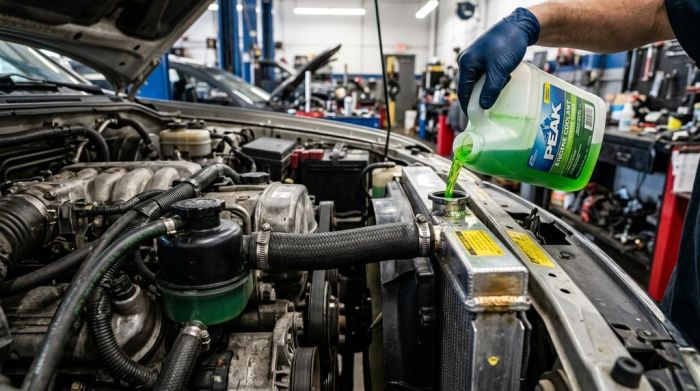
When the mechanic says your coolant needs topping up, it is tempting to grab the cheapest bottle on the shelf or pour in plain distilled water. After all, coolant is mostly water anyway, so what difference does it make? This assumption is one of the most dangerous and costly mistakes a car owner can make.
The engineering reality is far more complex. Manufacturer-specified coolant contains a precise blend of corrosion inhibitors, water pump lubricants, and anti-foaming agents that are specifically calibrated for your engine's unique metal composition. Different engines use combinations of aluminum, cast iron, copper, and brass — each metal requires a specific chemical environment to prevent galvanic corrosion.
Using a cheap universal coolant or mixing different coolant colors — green, orange, pink, or blue — can trigger an incompatible chemical reaction. This reaction forms a thick gel-like sludge inside your radiator and heater core. This sludge clogs the tiny cooling passages, dramatically reduces heat dissipation efficiency, and forces your engine to run hotter than its design parameters.
Here is the truly silent danger: internal radiator corrosion. Cheap coolant lacks sufficient anti-corrosion additives to protect the internal surfaces of your radiator. Over 6 to 12 months of using substandard coolant, your radiator slowly develops microscopic pinhole leaks from the inside out. By the time you see a puddle of coolant under your parked car, the corrosion has already destroyed the radiator's structural integrity from within.
Beyond the radiator, improper coolant can damage your water pump seals, thermostat, and heater core. These are not inexpensive components to replace. A blown head gasket caused by chronic overheating is one of the most catastrophic and expensive repairs any car can face, often exceeding $2,000 in total repair costs.
The better approach: Always use the exact coolant type and specification listed in your owner's manual. It costs perhaps $10 to $15 more per gallon compared to generic alternatives, but a single radiator replacement costs $500 to $1,500 including labor. Proper coolant is the cheapest and most effective insurance policy for your entire engine cooling system.